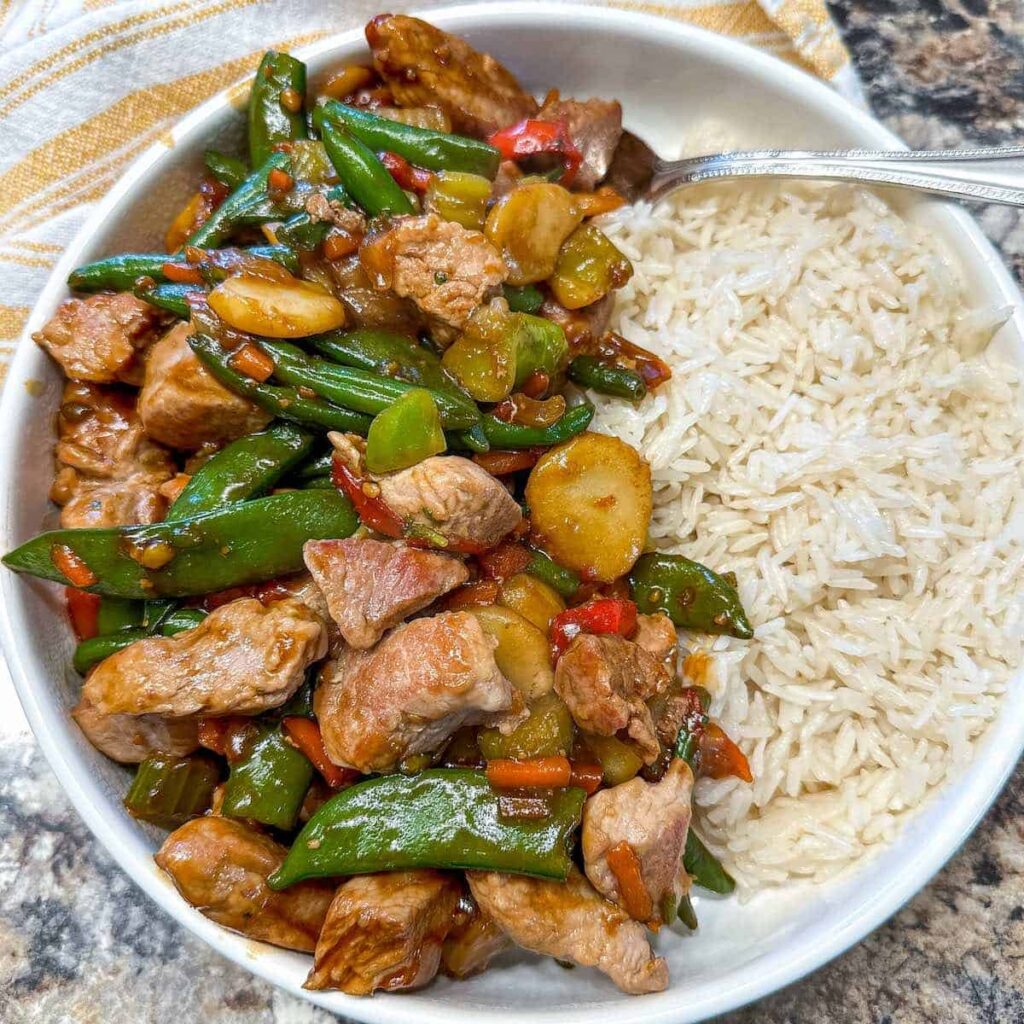
Pork stir-fry with rice is a flavorful and satisfying meal that combines tender, browned pork, crisp vegetables, a savory sauce, and warm, fluffy rice. Stir-frying uses relatively high heat and short cooking times, which can create excellent browning on the pork while allowing vegetables to retain some of their color and texture. Garlic, ginger, soy sauce, chili, or other seasonings can add layers of salty, spicy, sweet, and aromatic flavors, while the rice absorbs the sauce and juices from the stir-fry.
Pork is an excellent source of high-quality complete protein, providing all nine essential amino acids. Protein is essential for maintaining and repairing muscles and other body tissues. Depending on the cut, approximately 100 grams of cooked lean pork can provide roughly 25–30 grams of protein, making pork a protein-dense centerpiece for the meal.
Pork is also particularly notable for its thiamine (vitamin B1) content. Thiamine helps the body convert carbohydrates into usable energy and contributes to normal nervous-system function. Pork also provides other important nutrients, including vitamin B6, vitamin B12, selenium, zinc, and phosphorus. Choosing a leaner cut, such as pork tenderloin or trimmed pork loin, can provide these nutrients and substantial protein without as much saturated fat as fattier cuts.
Vegetables are one of the biggest nutritional advantages of a stir-fry. Ingredients such as bell peppers, broccoli, carrots, onions, zucchini, mushrooms, cabbage, or green beans provide fiber alongside numerous vitamins, minerals, and beneficial plant compounds. Using several differently colored vegetables also creates nutritional variety because different vegetables contain different combinations of micronutrients and phytochemicals.
Rice provides the meal’s primary source of carbohydrates, which the body can convert into glucose and use for energy. This creates a useful nutritional combination: the rice supplies carbohydrates, the pork provides substantial protein, and the vegetables contribute fiber and micronutrients. Brown rice provides more fiber than white rice, although either can be incorporated into a balanced diet.
Stir-frying can also be a useful cooking method because a relatively small quantity of oil can coat and cook a large amount of meat and vegetables. Using oils rich in unsaturated fats and avoiding excessive amounts can help keep the meal balanced. The sauce is worth paying attention to as well: soy sauce and bottled stir-fry sauces can contain considerable sodium, so using them moderately can preserve the strong flavor without unnecessarily making the dish extremely salty.
From a taste perspective, pork stir-fry is particularly enjoyable because of the contrasts. Properly seared pork develops a savory browned exterior, vegetables can remain slightly crisp, the sauce coats everything with concentrated flavor, and soft rice provides a neutral base that balances stronger seasonings. Aromatics such as garlic and ginger can make the dish intensely flavorful without requiring large amounts of added fat.
Overall, pork stir-fry with rice can be a delicious and well-rounded meal, especially when it contains a generous amount of vegetables. You get complete protein and important B vitamins from the pork, carbohydrates for energy from the rice, and fiber, vitamins, minerals, and plant compounds from the vegetables. With lean pork, plenty of colorful vegetables, a sensible portion of rice, and a flavorful but moderate amount of sauce, it can be an excellent combination of nutrition, variety, and satisfying flavor.