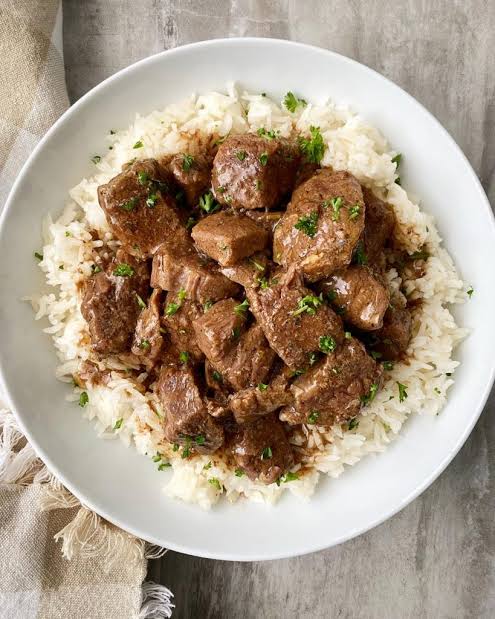
Rice and beef is a simple but extremely satisfying combination. Tender, well-seasoned beef brings a rich, savory flavor, while warm rice absorbs the meat juices, seasonings, and sauce. Browning the beef creates additional roasted and savory flavors through the Maillard reaction, which occurs when proteins and sugars react at high temperatures. Combined with fluffy rice, this creates a meal that can taste excellent even with relatively simple seasoning.
Beef is an excellent source of high-quality complete protein, meaning it provides all nine essential amino acids. Protein is necessary for maintaining and building muscle, repairing tissues, and producing important enzymes and hormones. Depending on the cut and fat content, around 100 grams of cooked beef can commonly provide roughly 25–30 grams of protein, making it a particularly protein-dense food.
Beef also provides several important micronutrients, including iron, vitamin B12, zinc, selenium, and vitamin B6. Its iron is particularly notable because beef contains heme iron, which is generally more readily absorbed by the body than the non-heme iron found in many plant foods. Vitamin B12 contributes to normal red blood cell formation and nervous-system function, while zinc supports normal immune function.
Rice primarily provides carbohydrates, which the body can break down into glucose and use as an important source of energy. This makes rice and beef a useful combination when you want both energy and substantial protein. Brown rice generally provides more fiber than white rice, but white rice is still a useful carbohydrate source and can absolutely be incorporated into a balanced diet.
The combination can be made considerably more nutritionally complete by adding vegetables such as broccoli, carrots, bell peppers, onions, green beans, spinach, or zucchini. Vegetables contribute fiber, vitamins, minerals, and numerous beneficial plant compounds. They also add different textures and flavors, allowing you to create a larger, more varied plate without simply increasing the amount of beef or rice.
The type of beef matters as well. Leaner cuts can provide plenty of protein while containing less saturated fat than particularly fatty cuts. Beef can certainly be part of a nutritious diet, but dietary guidelines generally recommend keeping saturated fat intake moderate and incorporating a variety of protein sources rather than depending exclusively on red meat.
One reason rice and beef works so well as a meal is its flexibility. Garlic, onions, black pepper, paprika, cumin, chili, herbs, soy sauce, tomato-based sauces, or numerous other seasonings can completely change the character of the dish. The rice readily absorbs these flavors, while properly browned beef provides the strong savory foundation.
Overall, rice and beef can be a delicious, filling, protein-rich meal. Beef supplies complete protein along with iron, zinc, vitamin B12, and other micronutrients, while rice provides the carbohydrates needed for energy. Adding a generous portion of vegetables and choosing an appropriate amount of lean beef can turn this very simple combination into a well-rounded meal containing protein, carbohydrates, fiber, vitamins, and minerals.